
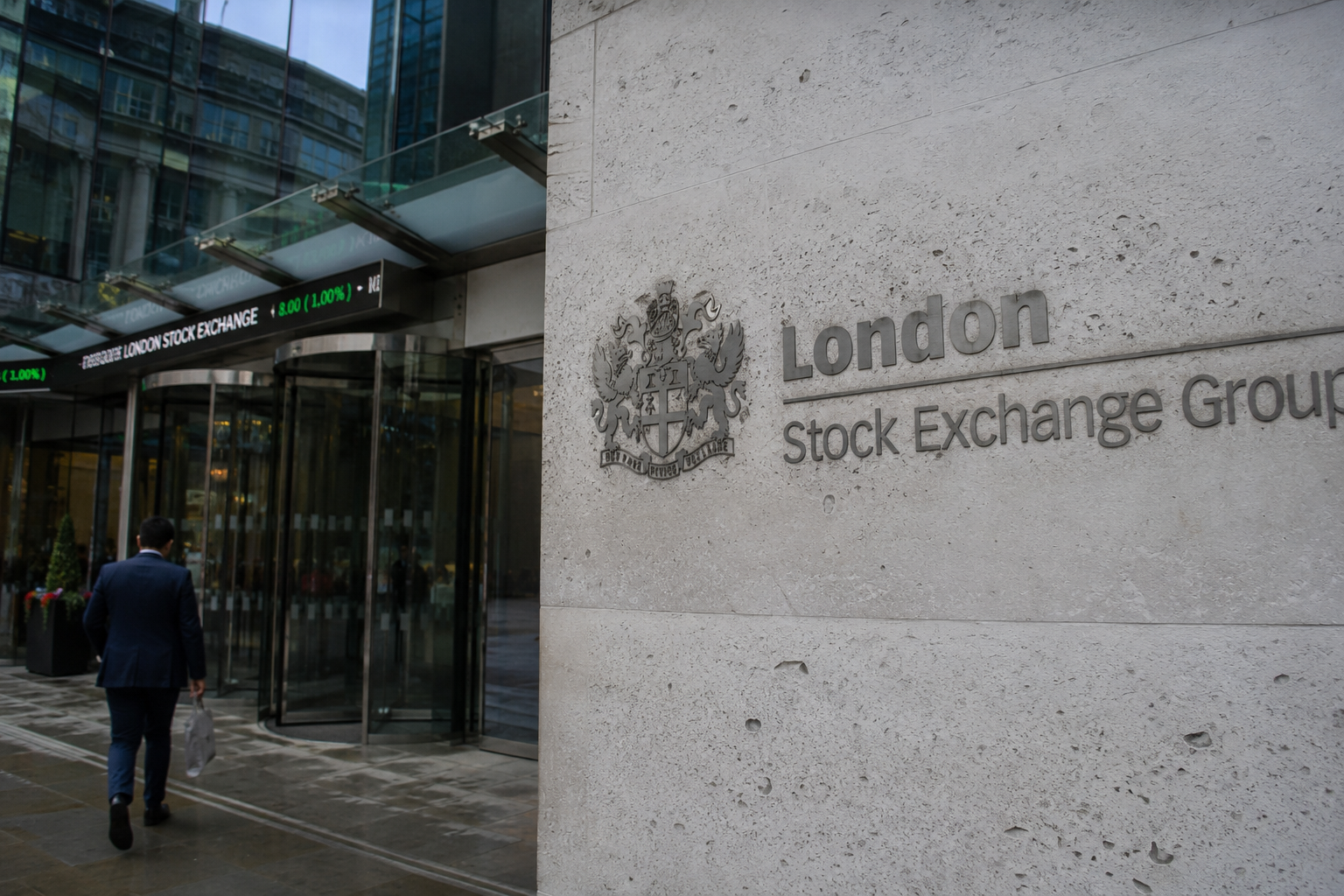
The proposed £5.5 billion takeover of easyJet by US investment firm Castlelake has become the latest example of overseas buyers targeting London-listed companies, highlighting how Britain’s valuation discount is fuelling a record year for mergers and acquisitions even as concerns grow over the shrinking size of the country’s public equity market.
easyJet said on Sunday that it intends to accept Castlelake’s revised offer, marking another high-profile acquisition in what has become one of the busiest years for foreign takeovers of UK-listed businesses.
The proposed deal comes only weeks after ingredients producer Tate & Lyle agreed to a £2.7 billion acquisition by US-based Ingredion.
Several London-listed companies have agreed to be acquired this year.
Asset manager Schroders agreed in February to a £9.9 billion takeover by US-based Nuveen, ending the independence of the 222-year-old investment house in one of Europe’s biggest fund management deals.
In March, Unilever agreed to sell its food business to US spice maker McCormick & Co for $44.8 billion, the largest transaction involving a UK company so far this year.
More recently, laboratory testing company Intertek agreed to a takeover by Swedish private equity group EQT in a deal valued at about £10.9 billion, including debt.
Warehouse landlord Segro also received a £12.6 billion takeover proposal from US rival Prologis last month, although the company rejected the offer, saying it undervalued the business.
Earlier this month, Reuters reported that the value of takeover offers for UK companies has surged more than 210% from the same point last year to exceed $231 billion in 2026, putting Britain on course for its busiest year on record for dealmaking.
Foreign acquisitions now account for 86% of all UK mergers and acquisitions by value this year, compared with 75% during the same period last year, with US buyers responsible for more than half of those overseas bids.
A valuation gap draws strategic buyers
Fund managers argue that the wave of acquisitions is being driven largely by the wide valuation gap between UK-listed companies and global peers, particularly those in the United States.
According to World PE Ratio data, US equities currently trade at a price-to-earnings multiple of about 26.5 times, compared with roughly 18 times for UK stocks.
There are structural reasons why UK companies command lower valuations, including slower earnings growth, greater exposure to cyclical sectors, a smaller technology sector, and lower investor willingness to pay premium multiples.
However, many investors believe the discount has become excessive.
“There is effectively a London postcode discount between comparable companies,” Clive Beagles, manager of the JOHCM UK Equity Income Fund, said in comments published by Morningstar.
“Take Standard Chartered and DBS Bank in Singapore. They have almost identical geographic footprints, yet one trades at a roughly 40% discount to the other. IAG trades on around half the earnings multiple of Delta Air Lines, despite having a better balance sheet and generating a higher return on capital employed. Why? Because it is listed in London.”
Mark Ellis, founder and chief investment officer at Nutshell Asset Management, believes the valuation gap has created an attractive opportunity for strategic acquirers.
“Given the size, depth, and global leadership of the US market, some premium to UK assets is entirely justified,” Ellis told Morningstar.
However, he added that the current discount is difficult to explain on fundamentals alone.
“The UK market increasingly resembles one where prices are being driven more by sentiment than by underlying business quality,” he said.
“As a result, overseas acquirers are purchasing globally diversified, cash-generative companies at valuations that would be difficult to find elsewhere.”
IPO market struggles to offset departures
While takeover activity has accelerated, London’s initial public offering market has remained subdued.
Listings slowed sharply during the opening months of 2026 as geopolitical tensions and concerns about technology valuations prompted companies to delay planned market debuts, despite expectations that activity could improve later this year.
The imbalance between companies leaving the market and new listings has intensified concerns over London’s long-term competitiveness as a financial centre.
Some investors see opportunity in cheap valuations
Not everyone views the UK’s lower valuations negatively.
AJ Bell argues that buying companies at lower starting valuations offers investors greater long-term upside.
“Buying cheap gives you an advantage in the longer term, and that is where the UK market shines,” said Dan Coatsworth, head of markets at AJ Bell.
“You can buy shares in the best company in the world but pay too much, and you are dependent on everything going perfectly forever. The slight bit of unwelcome news can destroy highly rated shares.”
He added that lower valuations provide investors with a margin of safety and increase the potential for returns if earnings improve and valuation multiples recover.
The UK also continues to offer stronger dividend income than the US market.
According to AJ Bell, the FTSE 100 currently offers an expected dividend yield of 3.2% over the next year, compared with about 2.1% for the S&P 500.
“US corporates typically prefer to reinvest surplus cash back into their business or use the money for share buybacks. In the UK, there is a long-standing dividend culture where companies on the market are often more mature and understand the value of regular cash rewards for shareholders,” Coatsworth said.
Shrinking market raises long-term concerns
Despite the potential benefits for shareholders receiving takeover premiums, fund managers warn that the continuing exodus of listed companies could weaken Britain’s capital markets over time.
“At the current rate of M&A, there will be no UK stock market left in 10 years. We’ll have nothing left,” Beagles said.
“Until something more fundamental changes, this will continue. In the meantime, it can feel like a sugar rush. Investors can still make strong returns, and we’ve seen that in performance over the near and long term. But ultimately, it is not in the country’s interest to have a shrinking market that heads toward zero. Until the valuation gap meaningfully closes, this trend is going to persist.”
The post easyJet to Schroders: why foreign buyers are snapping up UK companies appeared first on Invezz